

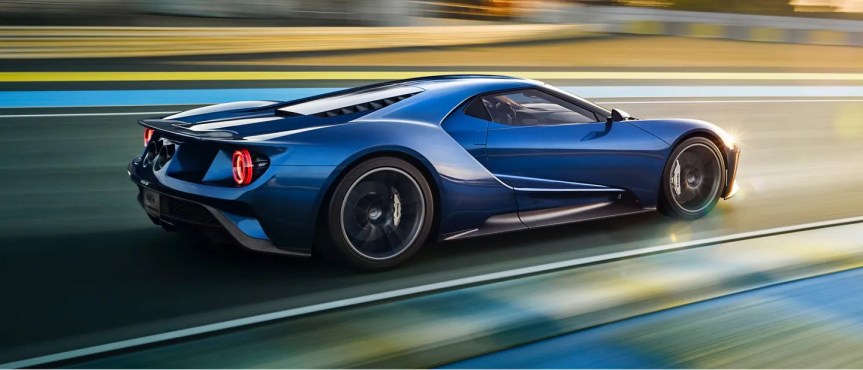
Introduction: A Marriage of Speed and Sophistication
In an era increasingly governed by convenience and automation, the sports car remains a glorious contradiction. It is engineered for speed, yet crafted with elegance. It serves no utilitarian purpose beyond the joy of driving, yet it commands admiration and envy across generations. Sports cars exist not to blend in, but to stand out—to offer something visceral in a world growing ever more virtual. From the hush of a leather-lined cabin to the explosive crescendo of a V8 engine at full throttle, a sports car engages the senses with theatrical precision. It is less a machine and more a work of rolling sculpture.
Defining the Sports Car: More Than Just Speed
It’s tempting to define a sports car by performance metrics alone—horsepower, torque, zero-to-sixty figures—but the true character of a sports car is more nuanced. It’s about balance, intention, and the alchemy between engineering and emotion.
-
Purpose-Built Design: A sports car is conceived with a singular purpose—driving pleasure. Its dimensions, weight distribution, and aerodynamics are tuned not for cargo space or fuel economy, but for responsiveness and agility.
-
Driver-Centric Interior: From deeply bolstered seats to perfectly positioned gear levers, the interior of a sports car is designed to make the driver feel like a part of the machine.
-
Performance Without Compromise: Unlike supercars, which often favor excess, true sports cars strike a balance between power and poise. They are fast, yes, but they are also predictable, precise, and profoundly engaging.
-
Heritage and Character: A sports car often carries a legacy. Whether it’s a Porsche, an Alfa Romeo, or a Jaguar, it speaks of tradition, craftsmanship, and evolution.
This synthesis of performance and personality is what elevates a sports car beyond the realm of transportation into that of lifestyle and identity.
The Evolution of Sports Cars: From Track to Tarmac
The origins of the sports car are inseparable from the history of motorsport. In the early 20th century, automakers began producing vehicles that could compete on race tracks by day and cruise city streets by night. These dual-purpose machines laid the foundation for what would become the modern sports car.
-
1920s–1930s: Brands like Bugatti and Bentley introduced grand tourers that balanced racing pedigree with opulent style.
-
1950s–1960s: The golden age of sports cars saw the rise of the Jaguar E-Type, Ferrari 250, and Mercedes-Benz 300SL—icons that defined mid-century automotive culture.
-
1970s–1980s: The sports car evolved alongside new technologies. Innovations in aerodynamics, fuel injection, and lightweight materials led to models like the Porsche 911 Turbo and the BMW M1.
-
1990s–2000s: This era brought refinement and accessibility. The Mazda MX-5 Miata, Nissan 300ZX, and Chevrolet Corvette became more reliable, yet retained their fun-loving spirit.
-
Today: Sports cars now incorporate cutting-edge systems—active suspension, launch control, hybrid powertrains—while preserving the analog charm that defines the genre.
Though their shapes and powertrains have evolved, the essence remains unchanged: a celebration of motion, design, and driver engagement.
Icons of the Industry: Models That Redefined Performance
Over the decades, a few models have risen above the rest—not just for their technical brilliance, but for the cultural waves they created.
-
Porsche 911: A masterclass in evolution, the 911 has maintained its iconic silhouette while continuously refining its performance. Its rear-engine layout remains a bold engineering choice, yet it’s become a standard of balance and handling.
-
Ferrari 458 Italia: Representing the pinnacle of naturally aspirated precision, the 458 combined Italian artistry with Formula 1-derived technology, creating an unforgettable driving experience.
-
Mazda MX-5 Miata: Proof that less can be more. With modest horsepower but perfect balance and a featherweight frame, the Miata is a love letter to pure driving.
-
Chevrolet Corvette Stingray: A symbol of American performance, the Stingray democratized the sports car experience by delivering supercar thrills at a relatively accessible price.
These cars are more than engineering feats—they are icons, remembered not just for what they did, but how they made drivers feel.
The Emotional Equation: Why Sports Cars Still Matter
For all their mechanical brilliance, the appeal of sports cars is as emotional as it is technical. Driving one offers a break from the anesthetic sameness of daily commuting. It becomes a ritual—starting the engine, hearing it come to life, feeling the road through your fingertips and spine.
-
Connection: A sports car demands attention. It rewards finesse, punishes recklessness, and teaches the driver something new with every mile.
-
Freedom: In an increasingly regulated world, the open road and a sports car represent autonomy—freedom of expression and movement.
-
Beauty: Their shapes are designed not merely for aerodynamics, but to stir something within the observer. A well-designed sports car turns heads and ignites conversations.
To own a sports car is to embrace joy without justification.
The Future of Sports Cars: Electric, Autonomous, and Still Exciting?
The automotive landscape is shifting. Emissions regulations, fuel economy standards, and the electrification of powertrains are redefining what performance looks and feels like. The question is no longer whether the sports car can survive, but whether it can adapt without losing its soul.
-
Electric Sports Cars: The Porsche Taycan, Tesla Roadster, and Rimac Nevera prove that electric vehicles can deliver blistering performance without sacrificing thrill.
-
Hybrid Performance: Cars like the Ferrari SF90 and McLaren Artura blend combustion engines with electric motors for both power and efficiency.
-
Digital Driver Aids: While purists may grumble, modern systems like torque vectoring, active aero, and adaptive suspension enhance performance while keeping the experience engaging.
The core values—connection, emotion, beauty—remain. It is only the tools that are changing.
Conclusion: A Legacy in Motion
The sports car is more than just a fast vehicle—it is an embodiment of human aspiration. It reflects a desire for mastery, beauty, and experience in an increasingly automated world. Though it may evolve with the times, its spirit remains untamed.
Owning a sports car isn’t always practical, but it was never meant to be. It’s an indulgence, a passion, and a personal statement. For those who understand it, nothing else will do. And as long as people value craftsmanship, thrill, and individuality, the sports car will not just endure—it will continue to inspire.
 News 24 Car Blog